Home
Chainbreakers
noun
1. A person who refuses to let childhood sexual abuse remain hidden, ignored, or repeated.
2. A survivor, ally, or advocate who speaks out, seeks justice, and helps stop the cycle of abuse.
3. Someone who breaks the chains of silence, shame, and harm so that others do not have to carry them.
About
About Chainbreakers
Sem astrum tortor consequat porta. Ornare arcu odio ut sem nulla pharetra. Quam elementum pulvinar etiam quam lacus civitas integer vitae justo eget magna fermentum iaculis deliciae feugiat.Aliquam maecenas ultricies mi eget mauris lobortis scelerisque fermentum dui faucibus. Luctus venenatis magna fringilla urna porttitor rhoncus. Elementum integer enim neque volutpat.

Eget mauris pharetra ultrices neque. Porttitor leo a diam sollicitudin tempor. A consequat semper viverra nam libero. Proin fermentum leo vel orci porta pulvinar neque laoreet.



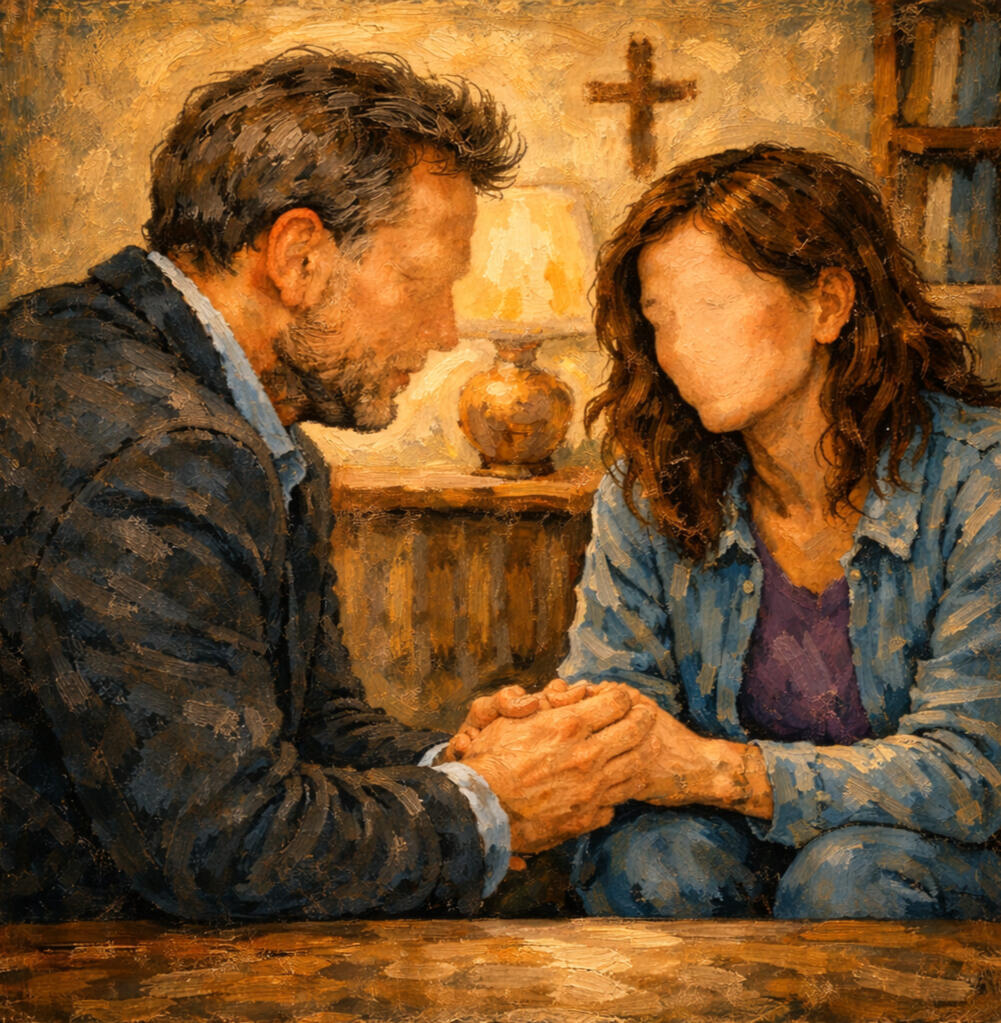
By Dr Rosa Hubbard-FordConsider first of all the basis of good communication skills and note that only about 7% of communication is through speech. Where does the remainder come from then? It comes from both your body language and tone of voice. So here are a few suggestions which can be practised in your personal life with family, friends and colleagues so they become natural to you.When preparing for the interview, put your chairs at an angle to each other as sitting opposite each other might feel a bit threatening – and if you have a desk between you, this will distance you from the Chainbreaker. If you are relaxed, it will put her at ease. Try to leave your arms and legs uncrossed to indicate you are open minded and willing to listen. Lean slightly towards her so she realises you are interested in what she is saying. But beware of leaning too far into her space, as this can be scary and intimidating, or leaning too far away from her, which may indicate you’re bored or don’t want to be with her. Similarly, try to maintain eye contact (but not a fixed stare!) to let her know you’re interested in what she’s saying to you. If you look around the room, at the clock or out of the window, this may show you’re not interested, or don’t have time for her story. It might be hard for the Chainbreaker to maintain eye contact with you, so allow her this. In time, when she knows you’re listening to her, she’ll gain confidence and will be able to meet your eyes with hers as she builds trust in the relationship. Even someone who’s visually impaired will know if you’re looking at them as you incline your head in their direction.Throughout the interview, it’s important to observe:ACTIVE LISTENINGActive listening means giving the Chainbreaker your full and undivided attention. You’re engaged in a dialogue of great importance to her, and she needs to know she has your full attention and interest. Active listening also involves making appropriate responses.There might be times when you don’t understand what you’re being told. It’s fine to ask for clarification so you’re better able to help.All this takes time, practice and experience to develop. Active listening isn’t a natural attribute. Your role in using these skills will be to create a positive relationship between you and the Chainbreaker.You may find there are some things that are hard for you to hear. Child sexual abuse is a very sensitive and painful subject. The Chainbreaker needs to know you can listen to her story and not ‘shut your ears’ because it’s too painful or uncomfortable for you.SCENARIOYou might hear a sound like a firework, be aware of it, and just carry on with what you’re doing, not really paying much attentions to it. It’s a firework, and that’s it!However, you might want to know more about the firework. You might want to know what time it went off, how close it was, any after effects of it being let off, perhaps what type or size of firework it was. A rocket will sound very different from a sparkling fountain or a Catherine wheel. So in this case, you’ll listen to the firework rather than just hear it, and you’ll analyse the sounds in greater detail.Similarly, active listening when you’re working with a Chainbreaker:Requires being fully attentive and connected with her during an interview;Is not only hearing what is said, but also what is not said;Entails observing everything you can about her;Means you’re alert to everything she says;Involves helping her to clarify her thoughts and feelings, which may be confused;Is letting her know you have heard and understood;Entails checking you heard what she intended to convey (see 3. Reflecting.)EMPATHYEmpathy is being sensitive and aware of the feelings of the Chainbreaker, experiencing her pain vicariously through sharing her experience as she relates it.Empathy is not bringing your own experiences to the interview, saying something like, ‘Well, I had a similar experience, and ….’Empathy is not telling the Chainbreaker, ‘Someone else suffered abuse and got over it by …’Empathy is being able to see, notice and realize how someone sees their life, what is happening to them and what has happened to them.Empathy in interviews with Chainbreakers is about being able to feel you’re alongside her at the time she was abused, maybe as a young child, and experiencing with her the terror or confusion she may have felt, the helplessness of the defenceless child, and being able to affirm to that child she isn’t alone, voiceless, trapped in her experiences. You are there with her, present and alongside her in her unique situation. It’s about being able to feel explicitly what the Chainbreaker is feeling, or has felt, and being an ‘enlightened witness’ – someone who knows what she’s feeling as if having been there with her – to her suffering. Sharing in this way is validating for the Chainbreaker, who perhaps has never been believed before, or may never have previously spoken about the abuse.
By Roslyn LawranceOn a glorious spring day in England, I jotted down some thoughts on conflict, both in our personal lives and between nations. As I wrote, the sun was shining in a clear blue sky, and my children shed their sweaters and jackets as they played in the garden. Everywhere had come gloriously to life after the long hibernation. The daffodils and primroses, which had previously looked desperately bedraggled as they struggled against the endless winds, rains and night frosts, were suddenly radiant and glorious, bobbing gently in the soft breezes. Our resident robin sat on the fence, hopeful that someone would turn over the soil and expose a juicy worm or two for him, and in the willow tree, a blackbird trilled its song. My children were healthy and content, and I was at peace.As I watched them play, I was reminded of my mother, who had once lived in the house I now called home, for the garden was full of the flowers she loved so much and planted in happy profusion. More than anything else, the forget-me-nots reminded me of her, because they were her special favourites and grew with complete abandon, spreading themselves wherever there was a nook or cranny they could appropriate. Whenever I visited her, she would dig up a clump for me to take home and plant in my own garden, and my little daughter, who somehow misunderstood their name, would point in delight at the ‘forgive-me-nots’, and help me water them into their new home. Her innocent mistake seemed so apposite in our world of turmoil that the name stuck, and as I looked out on that spring day onto all that was unspeakably precious to me, it seemed especially poignant. For once again, we were at war. Once again, we were sending our young men to certain danger and possible death. Once again, we were wreaking destruction and devastation on those who had already suffered horrors beyond imagining. Once again, I found myself asking endless questions. Once again, the answers were frustratingly elusive.In the years since then, my children have grown up and some have children of their own, but we have remained involved in conflicts in far off places, and I have continued to wrestle with my own feelings about conflict in our personal lives, and my struggle to reconcile the practice of war with living the gospel of peace.I remember having to learn some of Caesar’s Gallic Wars when I studied Latin at school. It was something of an education in the realities of warfare. About the same time, I decided to read The Old Testament cover to cover, and was shocked and horrified by some of the more brutal passages. Tolstoy’s War and Peace, which I also read in my teens, confirmed for me the waste and savagery of war. And growing up in post-war England, I heard plenty of first-hand accounts of both the Great War and the Second World War.My father was a child in London in the 1940s, and he and my grandparents lived through the Blitz. Indeed, a house yards from their own was obliterated, while theirs was left intact. My mother’s family lived in Sussex, south of London, but watched the German bombers fly over on their way to drop their deadly load on the capital. Sometimes, a bomb would be dropped prematurely, and one landed on the cinema in the town where the family lived, killing more than a hundred children who were there for the matinee performance. Their tiny graves in the town cemetery remain a grim reminder of what we now call collateral damage. Our headmaster told us of the horror of listening to doodlebugs fly over, and how he would breathe a sigh of relief when the engines kept humming until they passed by, knowing that, today at least, it would be some other village that would be devastated when they fell silent and dropped to earth. My grandfather lied about his age to go to fight in the cavalry in 1915, and was in France for most of the war, but he kept his experiences to himself. They were too terrible to talk about. All he would say was, ‘The rats were dreadful. You’ve never seen such rats.’ Like so many, my great uncle did not come home from the Great War, making his young wife a widow for the second time, and I grew up among a generation of elderly spinsters for whom there had been no opportunity to marry, because there had been so few young men available in the 1920s.In my late teens, I saw at first hand the appalling barbarity of war and terrorism when I worked as a nurse in London, at a time when the Irish Republican Army (IRA) was targeting English cities. Sometimes we would hear a bomb go off, and one blew in the front of our nursing school when the building next door was attacked. Bomb victims often came to our hospital for treatment, and we also looked after men injured in various conflicts throughout the world. Sammy was the same age I was, and had been fighting with the Christian militia in Lebanon for three years. He came to us after he was shot in the face, losing one eye, and much of the sight in the other. There was a Kurdish freedom fighter, the right side of his face and body terribly disfigured by a bomb blast, and an Iraqi soldier, reluctant to leave to go back home and fight again. They shared with me something of their experiences, and their passion, or otherwise, for the causes for which they were fighting. It was a shocking awakening for a girl from the kind of sheltered, privileged background I had known. I began to be aware of the impact we in the developed world have on the rest of our global neighbours.I remember with great affection others from very different cultures who have touched my life in profound ways for a brief time. Titi and Mariam were two little Iranian girls who lived with us for a couple of summers. Families like theirs were persecuted after the revolution, and I never found out what became of them. Felicien lived in Burundi, and we wrote to each other for several years before his government forbade our correspondence. I have often wondered whether he survived the violence of subsequent years.I am deeply grateful to have known them and so many others, and something of the struggles and persecutions that shaped their lives. For a naïve English girl who took freedom, safety and security so much for granted, their stories were distressingly illuminating, and shocked me out of indifference to the plight of many of the world’s inhabitants. I learned that what I do matters, and may have an impact on people I do not know, and repercussions for those whose lives I will never directly touch. The complexities of the global community in which we live started to dawn on me, and, since then, I have never been able to look at myself as simply English, or British, or Western, or Latter-day Saint. I am, of course, all of these, but I also share this planet with billions of my spirit brothers and sisters, whose lives are just as precious as mine, and who are just as deserving of the same freedoms and advantages I am able to take for granted.When I was a student nurse in London, living under the threat of IRA bomb attacks, I was not so much aware of the kind of intemperate polemics and histrionics we see so frequently in the media today. Our modern access to immediate platforms, where we can vent our intolerant or bigoted views freely and anonymously, has led to all kinds of ill-informed views being aired with certainty and anger, and with contempt for those holding different opinions. It was not that we condoned the actions of the terrorists. Certainly, those of us who saw the results of their atrocities could find no possible excuse for their behaviour. However, we did not allow them to dictate terms to us. We continued to live our lives as we had done before. When our nursing school was damaged by the bomb blast next door, we stepped over the rubble and held classes as usual. We were not encouraged to fear the terrorists, nor were we whipped up into a frenzy of hatred against them. While we condemned their outrages and supported every effort to bring them to justice, we also wanted to understand them and their motivation. It seemed a constructive way forward, and felt much more comfortable than anger, hatred, or fear. It was, I think, a very healthy sang-froid.During that time, I nursed a man who had been horribly burned by a phosphorus shell. Some called him a terrorist, others a freedom fighter. To me, he was simply a man, weak, young, vulnerable, in pain. He talked to me about the cause he espoused. To this day, I do not know how right or wrong he was. I know he had suffered injustice and oppression I can scarcely imagine. How does one fight such things when one has no voice, no power? At what point does legitimate defence become unwarranted aggression? It did not seem appropriate to judge him. Knowing him taught me about different perspectives, about seeing the other side of the story. It taught me about the helplessness and hopelessness so many of our global brothers and sisters feel. It taught me how hugely advantaged I am by comparison to most of the world’s population. It taught me that it is arrogant to judge those whose sufferings I cannot begin to imagine. And it taught me that I never, ever want to be motivated by anger, or hate, or fear, or some sense of innate superiority.I am deeply sceptical of the posturing of the polemicists, and of the absolutes in which the propagandists deal so skilfully. Truth does not reveal herself easily to the casual seeker, I think, and those in the media who would whip us up into a frenzy of hate, anger and partisanship, by reducing complex issues to simplistic platitudes, take advantage of the intellectually lazy, and they insult the honest in heart. But how well their tactics work!I was in conversation a while ago with a woman who believed that we should not allow immigration for those who follow Islam. They are not culturally suited to living in our society, she told me. They want Sharia law to prevail and do not know how to treat women with respect. There was no moving her from a position she held with absolute certainty. The anger she felt that we should show any latitude to such people was clear, and she proclaimed it assertively and loudly. It hurt my soul to hear her views, and I thought, among others, of my much-loved son-in-law, who comes from just such an immigrant family. He was raised a Muslim, and is a man who could teach many Christians, including Latter-day Saints, what it means to be a good and honourable man, an upstanding citizen of a western country, and a devoted and exemplary husband. Our family would be the poorer had his family not been allowed to immigrate here.Democracy and liberty surely give us not only the right to freedom of speech, but also the obligation to think deeply and to explore widely as we form our views. How can a population make democratic decisions when only one view, or a narrow selection of views, are allowed open expression, while all others are derided, denigrated or dismissed as negative and subversive? And if any of us is associated with a cause that operates by maligning those whose views oppose it, are we not diminished by that association? And surely, those of us who enjoy more freedom than much of the world’s population can dream of, can afford to treat those who disagree with us with courtesy and good grace?And so in those difficult times, and in the difficult times that have continued to come upon us for all kinds of reasons, I have turned for comfort and wisdom to the scriptures, especially to the Book of Mormon. I find it has much to offer us, for whom it was, after all, written, as we seek guidance on the issues we face in our private lives, in our national lives, and as a global community.The Book of Mormon societies certainly seemed at the very least to be open to newcomers, even when they must have come in large numbers. The descendants of Mulek in Zarahemla allowed the Nephites not only to join them, but to dominate their government and language, installing the Nephite Mosiah as king over their new society (see Omni 1:12-19). We have no idea of the size of either population, but we know that the original people of Zarahemla outnumbered the Nephites during the reign of Mosiah, grandson of that first Mosiah (see Mosiah 25:2), so it seems reasonable to infer that the incomers had always been in the minority. In spite of the Mulekites’ superiority of numbers, and the very different cultures that had clearly developed during some 350 years since the two societies left Jerusalem, Ameleki’s account suggests that it was a friendly amalgamation. Of course, Amaleki was a Nephite, and the Mulekites would probably have told the story differently, but it was certainly not a hostile takeover.Later, when Limhi’s people leave the land they settled in the time of his grandfather, to escape Lamanite tyranny, they head for Zarahemla, and join Mosiah and his people. Again, we have no idea of the numbers involved, but the colony had required Lamanite guards to prevent them from leaving, had raised armies to face the Lamanites, and produced enough in tribute to make it worthwhile to the Lamanites to force them to stay. This was not an insignificant influx for the people of Zarahemla to absorb, yet Mosiah ‘received them with joy …’ (Mosiah 22:14). Would that all refugees escaping slavery and forced labour could find such a welcome.Alma’s colony, too, headed straight for Zarahemla after their miraculous deliverance from Lamanite bondage, not too long after Limhi and his people arrived there. Again, ‘… king Mosiah did also receive them with joy’ (Mosiah 24:25). It seems the arrival of a refugee population was a cause to celebrate for the Nephites.It could be argued that the peoples of Zarahemla, Limhi and Alma shared a common heritage and had much in common. However, the descendants of Mulek had kept no records, their language was corrupted and unintelligible to the Nephites, and they denied the religion that was so important in Nephite culture (see Omni 1:17). They must have seemed very other to Mosiah and his people. Equally, although both Limhi and Alma’s colonies had only been separated from the main body of the Nephites for three generations, their culture had undergone significant apostasy and instability. There would have been a learning process and a necessity to give and take as they assimilated back into mainstream Nephite society.However alike these societies may have been, or however closely related they regarded themselves, the same cannot be said of the Lamanites. In spite of their common ancestor, Lehi, they could hardly have considered themselves more unlike the Nephites, and the Nephites could not have regarded them as anything other than culturally, socially and religiously different, and hostile in every way. According to the Book of Mormon, the Lamanites had, ‘taught their children that they should hate [the Nephites], and that they should murder them, and that they should rob and plunder them, and do all they could to destroy them; therefore they have an eternal hatred towards the children of Nephi’ (Mosiah 10:17, see also vv 12-16). Nephites and Lamanites simply did not mix.Nevertheless, after Ammon and his brothers, the sons of Mosiah, underwent a miraculous conversion, they embarked on missions to the Lamanites, and during a period of fourteen years achieved remarkable success in some of the cities where they preached. This provoked intense persecution, resulting in the deaths of many of the Lamanite converts. Ammon advocated fleeing the Lamanite land, and joining the Nephites in Zarahemla. Understandably, the newly converted Lamanites doubted that they would be welcomed with open arms, but they made the journey and waited while Ammon presented their case to the leaders in Zarahemla. After consultation with their citizens, the Nephites gave up land to this new refugee population, their erstwhile bitterest enemies, accepting their pacifist stance and the need for their own armies to guard them from Lamanite hostility (see Alma 27:4-24). It turned out to be a good decision, and benefited the Nephites in the years that followed, but they initially gave refuge to the Lamanites because it was the right thing to do, not because it looked as though they had anything to gain by the arrangement.The Book of Mormon has something to say about confl
Preaching forgiveness to women who were sexually abused as childrenBy Roslyn LawranceWe believe in the doctrine of forgiveness. We accept that we need to forgive those who have offended us or done us wrong. We preach forgiveness as a pre-requisite to receiving forgiveness ourselves from the Lord for our own transgressions and sins. The scriptures are replete with exhortations to forgive. The Lord makes it clear that if we do not forgive others, we cannot expect forgiveness from Heavenly Father. (Matthew 6:15) He tells us that we are not to choose whom we forgive, but, rather, that we are required to forgive all men. (D&C 64:10) When Peter asked the Saviour how often his brother should sin against him and expect forgiveness, Jesus told him, ‘Until seventy times seven,’ (Matthew 18:22) from which we infer that our obligation to forgive is unending. The mercy we extend to our fellowmen should be as unconstrained and ungrudging as the mercy we hope to receive from our Heavenly Father. This doctrine is so familiar to us that we can teach it without a second thought. It has been thoroughly inculcated into our spiritual framework. We believe it deeply and try to live it as a principle. We understand that forgiveness is a blessing to those who forgive, as well as, usually more than, to those who are forgiven. Forgiving others gives us the opportunity to move on. It liberates us and allows us to receive the Holy Spirit in fuller measure.Thus it is that when a woman who was sexually abused as a child discloses that abuse in an LDS setting, she is often advised to forgive her abuser. This advice is usually accompanied by exhortations to fast and pray, study the scriptures and attend the temple. This is the way to healing, she is told. Not infrequently, forgiveness is emphasised as the most important factor on her road to recovery. Women who are given this counsel, typically try desperately hard to apply it, but healing often remains elusive for them. They become despondent. They are encouraged to make a more concerted effort, forgive more completely, even told that if they do not forgive they are more at fault than their abuser – ‘…he that forgiveth not his brother…standeth condemned before the Lord; for there remaineth in him the greater sin,’ (D&C 64:9) – and they struggle even harder, only to find themselves more surely stuck in the quagmire. They become convinced of their spiritual inadequacy, suffer chronically from depression and, sadly, all too often, stray from the Church.Why is it that encouragement to live a principle we know to be true should be so unhelpful to this group of women? Is their failure to heal the result of their unforgiving souls?Women who disclose the sexual abuse they suffered in childhood have to overcome many hurdles in order to reach the point of being able to call what happened to them abuse, and acknowledge that it has left deep wounds. Abused children are taught by their abusers to keep secrets. The adults they become do not easily lose the fear that there will be consequences too appalling to contemplate if they tell. Often, the abuse was perpetrated by someone they knew well, and should have been able to trust, perhaps even a father, grandfather or uncle. Victims of incest may find it especially hard to admit, even to themselves, that someone they love very much did terrible things to them. They know that telling violates the first principle of incestuous families – ‘You must keep our secret, no matter what the cost to yourself.’ They know, too, that disclosure will be likely to have repercussions for the whole family, not just for the victim and her abuser. Women who were abused by priesthood holders, particularly priesthood leaders, also face special challenges in disclosing. They know instinctively that they will be harder to believe, especially if the person they choose to tell knows their abuser. In addition, any victim who must constantly be in contact with her abuser, at Church, within the family, or both, will have developed coping strategies to deal with these encounters while keeping herself and her children, if she has them, safe. She knows that disclosure will disrupt irrevocably a status quo, which, while stressful and dishonest is at least familiar as well as fairly stable and predictable.It therefore takes enormous courage for any woman to disclose that she has suffered sexual abuse. A woman who discloses to a bishop has to overcome particular challenges, which can seem insurmountable to her. She has been abused as a child by a man, perhaps by more than one man, who was in a position of power and authority over her. Her relationships with men in adult life are likely to have been problematic, if not actually abusive. To disclose to a priesthood leader is to make herself vulnerable to a man who holds a position of authority. This can feel intolerably stressful and unsafe. If her confidant can acknowledge what this first, vital step to recovery has cost her, she may begin to feel able to trust him. Perhaps it will be the first time she has ever been able to trust a man to treat her with respect and dignity. His awareness that she is allowing him to see into her soul, and that he needs to be careful with her, can be the beginning of an important, healing relationship. To open our hearts is to be open to pain as well as joy. Women who have been abused know this, and have spent a lifetime denying themselves joy because they feel they cannot endure more pain. When such vulnerable people reveal themselves to us, we need to treat it as a privilege, and know we stand in holy places.This moment of disclosure is a critical juncture for the abused woman. The response she receives from the person to whom she discloses is crucial. It can give her hope and vindication, and the courage to take the next step in the healing process. Or it can make her wary and cautious, wondering if she is doing the right thing, or even whether she really was abused. Or it can leave her crushed and devastated, confirming all the feelings she already has of unworthiness and insignificance so that she doubts she will ever be whole again.So what can a bishop or other confidant do to ensure she leaves him in the right frame of mind to move on, begin to take control of her life and put her difficult past behind her? Is this the time to preach forgiveness?The most important gift a priesthood leader can give her is to believe her story. I have often been asked by priesthood leaders how they can know if a woman who says she was sexually abused as a child is telling the truth, as though there is a likelihood she might not be. There seems to be a perception that there are women who make such disclosures as some kind of attention seeking behaviour. There is also concern about ‘false memory syndrome’, and the possibility that some women are persuaded by the media or by questionable counselling techniques that the emotional problems they are experiencing are the result of childhood sexual abuse. Research and experience has taught us that while these possibilities exist, they are negligible. Of all the women I have known who have disclosed child sexual abuse, there has been no evidence that any of them has not told the truth. To the contrary, as their stories have unfolded, they have shared the main features of corroborated accounts of sexually abusive childhoods, and the women themselves have shown typical characteristics of survivors. Tellingly, when they are treated as women who have survived child sexual abuse, they make progress and get better. When women who disclose abuse are treated as neurotic or deluded, they typically fail to make any improvement in their emotional health.When a woman is believed, she is no longer alone. She immediately has someone on her side. That is an enormous relief. She is desperate to know what she can do to reclaim her life and is receptive to counsel from this new ally in her life. She has little confidence in her own judgement or value and is willing to accept his advice. Why, then, should this not be a good time to preach forgiveness and a new commitment to spiritual growth? After all, victims of childhood sexual abuse, of all people, have plenty to forgive.Let us think for a moment of the parable of the Good Samaritan. How much help would it have been to the man lying in the gutter, barely alive after his severe beating, if the Good Samaritan had preached forgiveness to him as he lay there on the road to Jericho? Or had suggested prayer and fasting would cure him? Or if he had charged off into the hills to bring the perpetrators to justice? Or if he had suggested that perhaps the man was exaggerating his injuries for ulterior motives? Or had chastised him for being in the wrong place or for being a tempting target to the bandits? Or if he had given him minimal help to get to the town and then abandoned him? Or if he had taken him to the inn and told him he had one week to get better and then he would be on his own? Clearly, none of these responses would have been appropriate. Instead, the Good Samaritan believed the evidence of his own eyes, ‘bound up [the man’s] wounds, set him on his own beast, and brought him to an inn, and took care of him.’ When he left the inn, he gave money to the host and told him to, ‘Take care of him; and whatsoever thou spendest more, when I come again, I will repay thee.’Sometimes, we equate spirituality with emotional health. We have no difficulty understanding that our bodies and our spirits are separate, or that we can have damaged bodies while our spirits are in good health. While our spiritual wholeness will certainly influence the effect physical illness has on us and our recovery process, we do not tell sick people that their condition is the result of their spiritual insufficiency. We have more difficulty understanding that the spiritually diligent can be emotionally damaged, and we are tempted to make the assumption that someone who is having emotional difficulties must be spiritually lacking. Of course, one has an impact on the other, but doing all we can to stay close to the Lord does not give us immunity from emotional pain or sickness, or from psychological injury. We do not expect the bereaved to bounce back to mainstream living after the death of a beloved spouse, parent, sibling or child, even with the knowledge we have that their death is an essential part of their eternal progression. We allow them a period of grieving and empathise with the loneliness they feel as they face life without their loved one. Just as our bodies are inevitably bruised, perhaps broken, when they are assaulted, and our souls face pain and heartache after bereavement, so our emotional well being is bound to be compromised by the kind of assault suffered by women who were sexually abused as children.The kinds of injuries likely to be sustained by someone who falls out of a tree are predictable to a degree, depending on factors such as how far the casualty fell, how they landed, their age, how quickly they received help and so on. Treatment can be determined accordingly. In the same way, the psychological injuries following childhood sexual abuse can be predicted within certain parameters. Neither physical nor psychological injury is necessarily affected by our spirituality, although the healing process from both can be profoundly influenced by it. Similarly, although miracles of healing occur as a result of priesthood blessings, – bones are mended, tumours vanish, – they are not the inevitable result of spiritual maturity and faith. For most of us, there is a process to submit to, professional experts to consult and trust, and a treatment plan to follow, which may lead to complete healing, or to a partial recovery that leaves a degree of permanent impairment. This is as true of psychological trauma as it is of physical trauma.We are able to accept easily in the case of physical illness that it is wise to put ourselves in the hands of medical experts. We know that an incorrect diagnosis or the wrong treatment will not only put recovery in jeopardy, it may actually make the patient more sick. When our friends or family come to us for support during times of serious sickness, we expect to offer that support in practical or emotional ways. We may relieve them of some of their chores. We may visit with them, bring them gifts, listen to their concerns and fears, and their experience of illness. We do not expect to advise them on what treatment they should be receiving. Certainly, we would not contradict their own doctors’ advice. Even if we are concerned that they are not receiving the best care and feel it necessary to suggest a second opinion, we would not presume to prescribe proper treatment ourselves. It would be no more appropriate for someone to whom a survivor of child sexual abuse has disclosed to attempt to prescribe treatment. The role of a confidant is to listen, encourage, reassure, uplift, give spiritual insight and practical help. It is not to supplant the role of a properly qualified expert. There is help available for survivors. There are therapies with proven track records. There are plenty of resources for women to use to supplement whatever help they receive. We can make all this kind of support accessible, and we can encourage the survivor to use them. We must not set ourselves up as experts and give advice we do not know to be useful.I trained as a nurse many years ago. I have some experience of medical procedures, although I certainly have not kept up to date with medical or nursing advances. I have nursed my mother and grandmother through their final illnesses and taken care of my eight children as they have succumbed to various ailments and injuries. My expertise in taking care of the physically sick is probably greater than that of most people. Sometimes, people ask me for medical advice. Often it is for something fairly superficial, and I can recommend the best cream or potion, or share something that I have found useful. However, if a friend came to me in distress and said they had all the symptoms of cancer, that they were afraid of the diagnosis, of treatment, of death, there is no way I could possibly give any advice other than to see someone who is properly qualified to give a diagnosis and prescribe treatment. I can give all the encouragement possible, relieve distress where I can, offer practical help. I cannot offer any opinion on whether or not my friend has cancer, or what their treatment should be. A woman who has suffered childhood sexual abuse has experienced one of the most traumatic emotional assaults it is possible to endure. If she looks to us for help, our role must be a supportive, not a prescriptive, one. We can encourage her to find appropriate treatment. We can be a friend, confidant, nurturer, practical helper. We can not be a therapist.So where does forgiveness fit into all this? Let us think about the victim on the road to Jericho again. The Good Samaritan did not preach forgiveness to him as he helped him onto his beast and took him to the town. It is not hard for us to understand how inappropriate it would be to do so under such circumstances. When a woman discloses the sexual abuse she suffered as a child, she is emotionally in a similar state to the physical state in which the Good Samaritan found the victim of robbery. She needs the first aid of being listened to and being believed. She needs reassurance that she is acceptable in the sight of the Lord. She needs to know that what happened was not her fault. She needs to be loved, respected and treated with dignity. She needs resources to be made available to her. She needs to move forward at her own pace, not have progress ‘goals’ imposed upon her. She needs to be in control of her own recovery. She has already been robbed of her free agency under appalling circumstances. This is not the time to make more demands of her which she cannot possibly meet, but feels she cannot refuse to agree to.We can imagine how the relationship between the Good Samaritan and his patient might have developed. Perhaps they became good friends. Perhaps the wounded man trusted his rescuer with his story of how he came to be on the road to Jericho, who his attackers were, and what they stole from hi
By Dr Rosa Hubbard-FordThese articles are written specifically for those who will be working with Chainbreakers in a one on one setting. In the Church, this is likely to be a bishop or other priesthood leader. However, they contain information that will be useful to anyone living or working with a Chainbreaker – friends, family, perhaps other Chainbreakers offering support to someone who has recently disclosed her abusive childhood.I refer to the interviewer as ‘he’ and the Chainbreaker as ‘she’ for ease of understanding, but these gender references are applicable to either sex.The terms ‘child sexual abuser’ and ‘paedophile’ are used to describe someone who sexually abuses children. The word ‘paedophile’ means literally ‘a person who displays sexual desire towards children.’ A child is anyone under 18.It’s important, as you work with Chainbreakers, to look at your own feelings. You’ve probably not had any personal experience of child sexual abuse, but if you have any unhealed wounds yourself, or if you have a family member or close friend who has suffered abuse which remains unresolved, it’s important to speak to an experienced counsellor or therapist before you work through these articles. You might want to work through these articles with someone who has more experience with child sexual abuse issues.Think of an airplane flight you’ve taken in the past. Before take-off, the flight crew will have demonstrated the safety procedures for the flight. You’ll have heard the directions given in the event of a lack of oxygen during the flight – a mask will drop down in front of each passenger which they can fix over their faces allowing normal breathing.Importantly, if you’re travelling with a child or less able passenger, you’re specifically instructed not to fix their mask before your own. Rather, you’re to fix your own mask first so that you’re then able to help the child or your less able companion.If you were to help them first, your capacity to fix your own mask might be compromised, and they wouldn’t be in a position to help you.So it is in helping Chainbreakers. You need to be fully aware of the issues involved, and confident in your ability to help before reaching out to someone in difficulty.Chainbreakers need to feel safety with you, and to trust your ability to help them. You can assist them by being strong, and knowledgeable enough to keep them from further suffering in their pained and anguished state.Child sexual abuse can arouse strong feelings in us when we work with Chainbreakers, therefore ensuring your own wellbeing and safety before you work with them is vital. It’s especially important not to bring your own biases, including personal feelings, problems and opinions, to your work with Chainbreakers.I’ve tried to keep these articles as short as possible, while making sure they’re long enough to give you an understanding of the complicated issues involved in child sexual abuse and the implications of working with Chainbreakers. They should also help you learn basic counselling skills so that you’ll be more confident in your ability to help. They’re intended as a starting point.Bishops may well have many Chainbreakers in their congregation. They may present you with some of your greatest challenges within your stewardship. These articles are intended to help you better understand how to fulfil this important role in helping Chainbreakers in their healing process. They’re also intended to support you as you reach out to these women.You may have had some counselling skills training, but not specific training in child sexual abuse. Even if the Chainbreaker you’re working with is referred on elsewhere for more in depth counselling or therapy, you will remain the person she relies on to provide spiritual support, so your awareness of abuse issues will be immensely helpful to you.Some Chainbreakers will need significant support from you, while others will only require a minimal assistance. Some will be disclosing to you for the first time and be feeling very much alone; others will have had help before seeing you and will have a strong support network. Some will rely on you as their main source of help, others will want to work through a more spiritual aspect of their healing, with you as their spiritual guide.Remember, honesty will be greatly valued by the Chainbreaker, so if you feel you’re unable to help her, except in a spiritual sense, and that it’s in her best interests for her to be referred on to someone else for more intensive or specialised work, it’s your duty to tell her. Keep in mind that as a bishop, you’re not required to put right everyone’s problems, no matter how much you’d like to! You might even feel pressure from the Chainbreaker’s family or ward members to provide a quick solution for her. However, it’s often the right solution to refer her (with her permission, of course,) to those who are professionally trained to help.Some thoughts about dual relationships, which are those where the counsellor takes on another role in addition to that of counsellor, either simultaneously or after the counsellor/client relationship has ended:In the Church, the duality of such relationships may be unavoidable. A ward member being counselled by her bishop may already know him well, as part of the congregation, as a friend or neighbour, or even as part of his family or extended family. The bishop should be aware of this duality and how to deal with it. It’s important for him to reflect on this dual role and to see if this is affecting the counselling process.If you’re a bishop offering counselling to victims of child sexual abuse, you need to seek out the support and guidance of your stake president, as there’s always the possibility of a conflict of interests. When this happens, the Chainbreaker may not be helped in a way that’s without bias or prejudice. You should know when and how to refer on to someone else if you feel that your role as counsellor may be jeopardized, or cause difficulties for the woman you’re counselling because of a dual relationship. Dual relationships are not necessarily harmful, but the potential is there. Thus, you should be aware of this within your own ward family and especially when working with deep-seated issues of child sexual abuse.You should be objective as you offer help, so that you’re not overly emotionally involved with the Chainbreaker. This wouldn’t be helpful to her, as she needs you to be stronger than she is. Your feelings could interfere with the counselling process if you find yourself emotionally involved, and you could find difficulty being unprejudiced.HOW DO YOU DEAL WITH THE STORIES THAT WILL BE BROUGHT TO YOU?Professional counsellors are generally required to have regular supervision with a supervisor so they can check their work is up to date and ethical. This also allows them to discuss some of their more difficult cases, which they can’t discuss with friends and family because of confidentiality issues. It’s important you identify someone you can do this with. If you’re a bishop, you would normally go to your stake president. It’s important that you maintain the confidentiality of the Chainbreaker you’re working with. You can change identifying details so you can discuss the content of your interviews without revealing the identity of the Chainbreaker.Always remember that child sexual abuse is a very complex subject, so it’s important for you to realise your own level of competence. If you feel you’re getting out of your depth, or you can’t cope with the disclosures being brought to you, it’s vital that you speak to someone more experienced than you are in abuse matters. LDS Family Services can be an important resource to you. If necessary, you can refer the Chainbreaker to them or another agency for more specialised counselling or therapy.These articles are designed to help you to be aware of the sorts of things with which you might be confronted as you work with Chainbreakers, so you can work from a more informed base.You can keep in mind that the feelings you might have of not being able to cope with issues of childhood sexual abuse, reflect the feelings of all Chainbreakers, who have spent a lifetime struggling to cope with the abuses they’ve suffered.Picture yourself coming home from work a bit late after a very difficult day. You say to your wife,‘Sorry I’m late, but it’s been an awful day. The accounts didn’t balance and no one was allowed to go home till we’d got them right. Jim lost his temper over it because he’d hoped to leave early and go to a football match. He really lost it, and threatened to quit, so there was a nasty scene. The boss wasn’t in a good mood either, so I wonder what will happen tomorrow. It was horrible being in the middle of it all.’After you’ve offloaded your feelings, you’ll probably have something to eat, settle down, watch something on television and forget about work until the next morning.Imagine hearing some dreadful secret abuse that one of your ward members has kept hidden for years, then going home and not being able to share it with your wife. It takes some skill and recognition of the sacredness of the trust you’ve been given by that Chainbreaker to be able to keep her secret. So it’s important to have someone with whom you can share your feelings, while maintaining the confidentiality of the Chainbreaker.CHILD SEXUAL ABUSESacrament meeting is over, and people are thanking you for the talk you gave on forgiveness. You feel good about the things you said, and realise you had a lot of attention as you spoke. You recognise that while most of the congregation looked thoughtful and attentive during your talk, Cathy looked upset, and continues to do so. She’s an attractive woman in her early forties, whose attendance at Church is sporadic. When she does come, she tends to be quiet and withdrawn. She approaches you rather nervously, and asks if she can see you for a few minutes. You invite her to come to your office in ten minutes’ time.Ten minutes later, Cathy is sitting opposite you in your office. She looks very distressed and confused. She stares down at her hands, which are tightly clasped in her lap.After a pause, she tells you she finds it hard to forgive others and feels unworthy of God’s love. She feels she can’t do all the things you said in your talk are necessary for someone to forgive another, and thus be forgiven of their own sins.You ask her why.Cathy tells you about a row she recently had with a neighbour over a wrongly parked car which had upset her. She hesitates as she talks and seems very close to tears. You wait for her to continue. Cathy tells you she has never been able to forgive anyone fully. As you listen, you feel that her degree of distress seems out of proportion for a neighbourhood row over parking.After several more moments, she softly sobs, then discloses her real reason for visiting you. She quietly reveals that her father sexually abused her as a child. She tells you she has never told anyone about this before. She stammers as she tries to get her words out. She tells you she knows she should forgive. You emphasised that in your talk. But to forgive her father for his abuses seems too much for her to do. She tries to speak coherently and apologises for her now copious tears.You move the box of tissues on your desk a little closer so she can reach for one as you wait for her to continue.Cathy tells you her father had said it was their special secret, that he loved her, she was such a pretty child, and it was his way of sharing a special love with her. He warned that if her mother found out, then he would have to leave home and no one would see him again, which would upset Mummy very much.Cathy cries even more as she asks you to help her. She says she doesn’t know how she can forgive her father, and feels she’s a really bad person not to be able to do the things you spoke about. She says she feels awful telling you these things about her father as he was a respected member of the ward till he became ill and died five years ago.Take a minute to think:What are your feelings right now?How competent do you feel to help Cathy?What skills do you think you might need to help Cathy?What fears or concerns might you have about continuing the interview?How do you think Cathy feels as she leaves your office?Why do you think she’ll feel that way?Do you think Cathy will feel she’s made progress?Here are some responses Chainbreakers hear from their priesthood leaders. Rate how helpful you think each one might be as you respond to Cathy.It’s her duty to forgive.God will judge her father one day.The abuse was long ago in the past and time heals.You’re not sure of the extent of the abuse so she should describe in detail what happened so you can be sure just how much abuse there was.You’re very sorry to hear about her story.Her father was a well respected man. You’re sure he would never have done such a thing. Perhaps she misunderstood.She must never speak of this again.She needs to read the scriptures and pray until she’s able to forgive her father.She should discuss it with someone else.You’re there for her to talk to at any time.You have no experience in this area so you cannot help her.You know someone else who suffered child sexual abuse and got over it quickly.You’re willing to help her even though you don’t have all the answers.WHAT IS CHILD SEXUAL ABUSE?Under the Laws of the United Kingdom, a child is defined as anyone under the age of 18 years. However, special consideration must also be given to vulnerable young adults whose physical age is over 18, but whose mental age is younger, for example a child with Down’s Syndrome or autism.Think about your own definition of child sexual abuse and compare it with the definitions that follow.Child sexual abuse is the deliberate exposure of minor children to sexual activity.A central characteristic of sexual abuse is the dominant position of an adult who allows himself or herself to force or coerce a child into sexual activity. Abuse by peers can also occur.Child sexual abuse may not be solely restricted to physical contact. Such abuse could also include non-contact abusive acts, for example, showing pornography to a child, voyeurism, sexual suggestion and involving the victim in child pornography.In the United Kingdom, the Department of Health in 2004 used the following definition of Child Sexual Abuse:‘[Child sexual abuse is] forcing or enticing a child or young person to take part in sexual activities, whether or not the child is aware of what is happening. The activities may include physical contact, including penetrative (eg rape or buggery) and non-penetrative acts. They may include non-contact activities such as involving children in looking at, or in the production of, pornographic material, or watching sexual activities, or encouraging children to behave in sexually inappropriate ways.’What did your definition add to the above, or what did it not contain?How close were you with your own definition?Have you learned anything about what child sexual abuse is?Child sexual abuse covers all events of a sexual nature, from an abuser making sexual innuendos, suggestions, gestures, exposing himself, showing inappropriate pictures to a child, involving the child in pornography, touching, sexual intercourse and rape.Note that child sexual abuse also encompasses incest, which is defined as ‘sexual activity between individuals so closely related that marriage is prohibited’, for example, sexual activity between a brother and sister. Incest involving a child is a form of child sexual abuse.FACTS ABOUT CHILD SEXUAL ABUSEIt’s often believed that child sexual abuse only takes place in obviously dysfunctional families. This isn’t true. Along with incest, it occurs regardless of race, class, ethnic background, family size, social group or community.It’s also often believed that those who are sexually abused become sexual abusers themselves. If this were true, it would mean most sexual abusers would be female. In fact, the majority of child sexual abusers ar


ROSLYN LAWRANCE is a founder member of Chainbreakers. She is a writer by profession and has written and spoken widely on abuse issues, often incorporating the challenges of being a Chainbreaker in her fiction and poetry. She grew up near the London Temple and has lived in California, as well as in Oxford and on the Isle of Anglesey. She is the happy mother of eight children, and grandmother of eight, too, and currently lives in Scotland.
DR ROSA HUBBARD-FORD is a psychotherapist and counsellor – with over 25 years’ experience - in private practice in Harley Street, London, and Bournemouth, Dorset. Her doctorate from The Metanoia Institute/Middlesex University, London, focused on producing a training manual to help those working with survivors of childhood sexual abuse and other abuses. The research was carried out in UK, USA and Australia. Rosa also offers training throughout UK and USA. Additionally, she is a trustee and trainer for Dorset Action on Abuse, a charity working to help adult survivors of childhood abuse. For more information see www.rosahubbardford.com
This is where our blog will be published.

By Roslyn LawranceCathy slowly washed her face and brushed her teeth. She delayed as long as possible the moment when she had to go to bed. Strange men might be lurking under the bed, or hideous witches might fly in at the window and cast spells on her to make her do bad things. Or the devil might be waiting to take her away.It had been a long, hot day, and she had enjoyed playing dressing up at Suzie’s house. They had pretended to be fine ladies in elegant dresses. Cathy had felt carefree and powerful as she had given commands to her imaginary servants, and they had obeyed instantly.When she came home, she had played with her dolls. Lizzie had long, chestnut hair and Sarah cried, ‘Mama’ when she lay down, but Jenny the baby doll was Cathy’s favourite. She washed them and changed them and sang to them as she rocked them gently. Sometimes she pretended that she was the doll, and someone was softly caring for her, soothing all her hurts away.At teatime, the children had laughed and joked and enjoyed Mummy’s shepherd’s pie. There had been strawberry ice cream for pudding, and all the children had begged for seconds. Cathy was lucky to have so many brothers and sisters. There were six of them. It meant they could share everything, and there was always someone to play with. And when Daddy came home and started to be cross, it wouldn’t always be the same child who bore the brunt of his displeasure.Soon, it was time for Cathy to get ready for bed. She put on her pink nightie because it had short sleeves and was lovely and cool, and she brushed her long, blonde hair until all the tangles were gone. She went downstairs to say goodnight. Daddy was home now, watching television with Mummy. They each had to have their goodnight kiss. Mummy proffered her soft, powdered cheek, and didn’t look up from her programme. Daddy kissed her full on the lips, patted her on the head and said, ‘Night night Sweetie Pie,’ in his jolliest voice.Cathy climbed the stairs slowly, folding her arms firmly across her chest, and counting the stairs as she went. It was the only way to climb the stairs to bed, and she always did it the same. At the top of the stairs, she took three long, slow steps across the landing, carefully counting each one, and then jumped into her bedroom, shutting the door hard behind her. She checked in the wardrobe and under the bed twice to make sure there were no strange men there, and she opened and closed the curtains three times to be certain no witches were waiting to come in the window. Then she sat on her bed and arranged the things on her bedside table so that they were all exactly right. Tiggy, the china squirrel went at the back with Tilly, the little peg doll next to him. Then Cathy carefully coiled the special piece of pink ribbon she had worn in her hair when she was bridesmaid to Auntie Louise. Behind it was her music box, which she wound up and listened to once, watching the tiny ballerina twirl gracefully round and round. Then she made sure that the pile of her most treasured books was quite straight and tidy. Finally, she knelt down to say her prayers. She always said the same prayer. 'Thank you for Mummy and Daddy and my brothers and sisters. Please bless the poor. Please don’t let strange men or witches get me. And please, please keep the devil away.'At last, she was ready to climb into bed. It was too hot to be covered with blankets, so she pulled them down to the bottom of the bed, but she left the sheet on. It was important to have the sheet over her. She thumped the pillow three times and looked at the clock. It was half past eight and she was supposed to be asleep by nine. If she wasn’t, something dreadful might happen. Or she might die. She shut her eyes tightly and concentrated on going to sleep, but the more she tried, the harder it became. She began to feel panicky inside, and she was so frightened that she started to tremble. What if she couldn’t go to sleep? She heard the hall clock strike the hour. It was nine o’ clock. Nothing had happened. Perhaps it would be all right after all. She closed her eyes again. Perhaps it would be all right.She heard noises downstairs. Mummy would be watching her programmes for at least another hour. Daddy was coming up to have his wash and to kiss all the children goodnight. He came every night to check them and give them a kiss. It showed how much he loved them, he said. Cathy lay with her eyes closed, listening to the water running in the bathroom, and the splish splash as Daddy washed himself. He was very particular about being clean and was very angry if any of the children went around with dirty faces. Sometimes, he bathed them himself to make sure they were properly clean. Cathy wished he wouldn’t. She thought she was too old to have him bath her, and she hated the way he scrubbed so hard it hurt.He was finished now. She could hear the water running away. He was going to the twins’ bedroom. He never stayed there long. Now he was softly closing their door. He padded across the landing to the girls’ room. They went to sleep a long time ago and she heard him switch off their light. He wouldn’t go in to the baby. He might wake her up and then she would cry. Daddy didn’t like the baby to cry. He would come straight to her. She heard the door slowly open and then gently close behind him, and she lay with her eyes closed pretending to be asleep. Daddy sat on the bed. She was perfectly still and quiet and so was he. Perhaps tonight he would think she really was asleep. She felt him lean forwards and kiss her on the lips again, and she smelled the freshness of the soap and felt the warmth of his body. He began to stroke her hair. ‘Hello Sweetie Pie. Daddy’s here. I know you’re awake.’And she opened her eyes because she knew she had to. She saw him sitting there, leaning over her, wearing his green pyjama trousers. The ones with the cord to tie them up, not the ones with the buttons. He smiled at her and she knew she had to go away. She closed her eyes again.‘That’s right, Sweetie Pie,’ she heard him saying, as she felt herself growing lighter and lighter until she was no bigger or heavier than a fairy. Slowly, and ever so quietly, her fairy self slipped out of her body and floated up, almost to the ceiling. Across the room she floated to the window, and she was so tiny that she could tuck herself behind the curtain and look out of the window. It wasn’t properly dark yet, and she could see the cats chasing each other while bats flew to and fro in the dusk. They lived in the loft. The children weren’t allowed up there, but sometimes Cathy climbed up anyway and hid herself with a book and a torch. No one would know where she was, and she could stay there for hours. The fairy Cathy watched Mr. Green come home from the pub, and Mrs. Green came out to meet him. But she couldn’t hear what they were saying. All she could hear were strange groanings and sighings. She felt afraid and knew she had to go further away. She floated through the thin crack in the window frame, and up and up, through the evening sky, right above the clouds. And here, at last, it was quiet. She could see the stars stretching away to eternity, twinkling with all their might, especially, it seemed, for her. She could see the moon shining brightly, and she knew there was a man in the moon smiling at her. She knew he was kind and gentle, and she wished she could go to him, but knew she could not. She lay down in the soft, fluffy clouds and rolled over and over. Nothing and no one could touch her here. It was oh, so safe and beautiful.She did not know how long she lay there in the clouds watching the stars, and feeling the goodness of the man in the moon. She wished she could stay there for ever, enveloped by the softness of the clouds. Slowly, however, she felt herself growing heavier. She knew she must go back. She resisted, but the pull was too strong. She sank gently through the clouds, and as she did so, she could no longer see the twinkling stars or the glorious moon. Relentlessly, she felt herself being drawn backwards through the crack in the window frame. For a moment, she stayed behind the curtains, but even that refuge was soon lost to her as her fairy self was again absorbed into the ordinary Cathy.She screwed her eyes up tightly and clenched her teeth. She hated this bit when she returned and everything hurt so much. Her body felt crushed and bruised and torn, and she thought her heart would break, it hurt so very, very much. She wished Mummy could be there to rock her and make it better. But Mummy wouldn’t come. Cathy knew that.She lay quite still and slowly opened her eyes. Daddy was waiting for her to open her eyes. He always did. He was standing over her and she knew he would be cross. He always was.‘You’ve been a bad girl again Cathy. You must try harder to be good.’(Oh, but she did try, Daddy. She tried so hard every day to be good.)‘Remember, I’ll know if you tell lies, or say bad things about me, and the devil will come and take you away.’(She would never, ever say bad things about you, Daddy. And please, please don’t let the devil take her away.)‘Now turn over, close your eyes and go to sleep.’So he left her and shut the door quietly. Cathy reached out for Jenny. She held her tightly as she curled herself up into a ball and gently rocked herself until she fell asleep.And strange men and witches and the devil haunted her dreams.
This is where you will find our shop and donation options.
Contact
Contact Chainbreakers
If you'd like to get in touch about anything you've read on Chainbreakers, or have any other queries, please enter your details below and we'll get back to you!
Done
Thanks for getting in touch!